The Lowdown on Paternity Leave

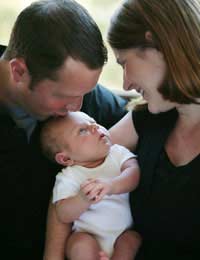
Employee fathers are becoming increasingly willing to equally share in the responsibilities of caring for their newly born offspring, but are employers as eager to encourage them?
Paternity Leave Rights
Employed new fathers in the United Kingdom are entitled to a minimum of two weeks paternity leave once their child is born. This can be taken anytime from the date of birth up until eight weeks afterwards. Depending on the generosity of your employer, you may be offered longer or a more flexible working arrangement.During this leave period you are entitled to the statutory paternity pay, which is basically the same as the Statutory Maternity Pay (SMP). This means a weekly allowance of £135.45 or 90% of your gross weekly earnings, depending on which is lower.
In order to quality for paid paternity leave fathers must first satisfy these factors:
- Have worked for your employer for 41 weeks when the baby is due.
- Be the biological father or married to, or partner of, the baby’s mother.
- Be responsible for the baby’s upbringing.
- Intend to assist in the baby’s care in your time off.
- Have correctly supplied your employer with the correct notice of paternity leave.
- Earn at least the lower earnings limit for National Insurance contributions.
In order to qualify for paternal benefits that you must supply written notice to your employer at least fifteen weeks before your baby’s due date.
The Right Balance?
This standard leave allowance was first introduced to the UK in 2003 and, in these socially evolved times of equal parental responsibility, widely seen as being long overdue. Even so many commentators believe paternity leave to be still unsatisfactory. At present, British fathers have the most unequal parental leave rights in Europe. The two weeks for fathers and fifty-two week allocation for mothers is seen by many as being somewhat imbalanced, and has lumbered British fathers with unenviable claim of having the most unequal parental leave rights in Europe. Finnish fathers, for example, are entitled to six weeks paid leave.Many feel that the current paternity leave does not reflect the more modern attitudes of fathers towards the care of their newborn babies. There has been a major shift from 20 years ago, when 52% of surveyed fathers were surveyed as believing it was their duty to be the breadwinner while women stayed at home to look after the family.

Re: How to Deal With Rumours
watcher - Your Question:Recently our workplace has been "managed" by a former workmateshe is quite OTT and particularly intimidates a…
Re: How to Deal With Rumours
recently our workplace has been "managed" by a former workmate she is quite OTT and particularly intimidates a few members of staff,…
Re: Office Politics Almost Ended My Career: A Case Study
Is this a true story? Which company did she work for?
Re: Understanding Harassment in the Workplace
IS indifference by a manager classed as harrasment, she never speaks to me, never asks about deadlines, training,…
Re: Improving Staff Morale
I enjoyed reading the articles. it was very up lifting
Re: All About Web Conferencing
Great article. Web conferencing is a boon for businesses of all kinds. By deploying on premise RHUB web conferencing appliances or…
Re: Beating the Workplace Bullies
I have been bullied for approx five years if not more at work. The problem is when a manager is the ring leader it is hard to not…
Re: Beating the Workplace Bullies
I was bullied in the work place, and it was really bad, my supervisor bullied me and other staff members and I was even stopped…
Re: Asking for a Pay Rise
The point about the level of pay rise is well made. There are generally limits within which there’s some flexibility, usually dependent on…
Re: Questionnaire: Do You Have Good Communication Skills?
add some precise question about communication. good ans....